
Six inventions.
One system.
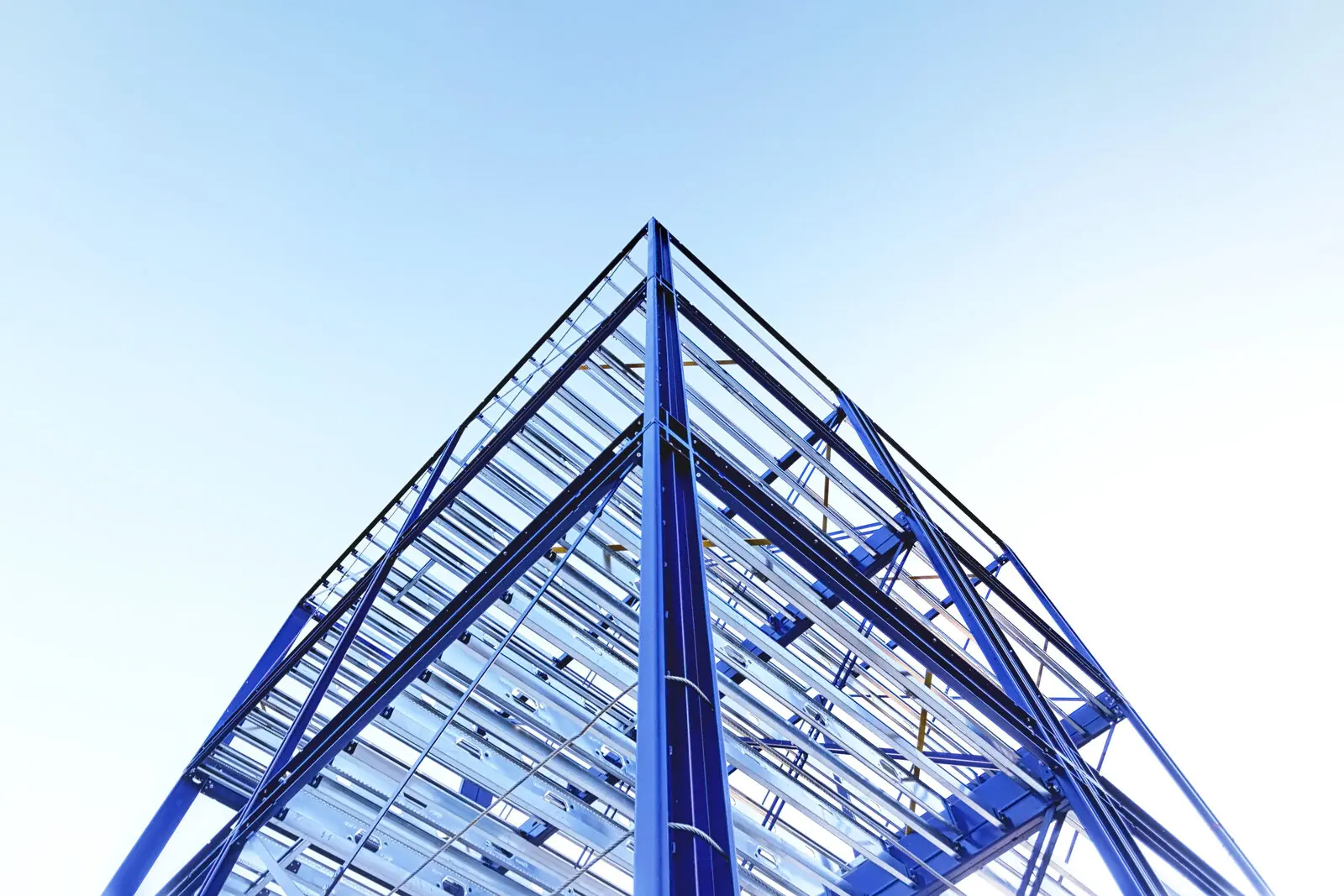
Kit frames are the heart of a family of construction automation technologies.
Every invention in the system exists to remove a cost from modular building.
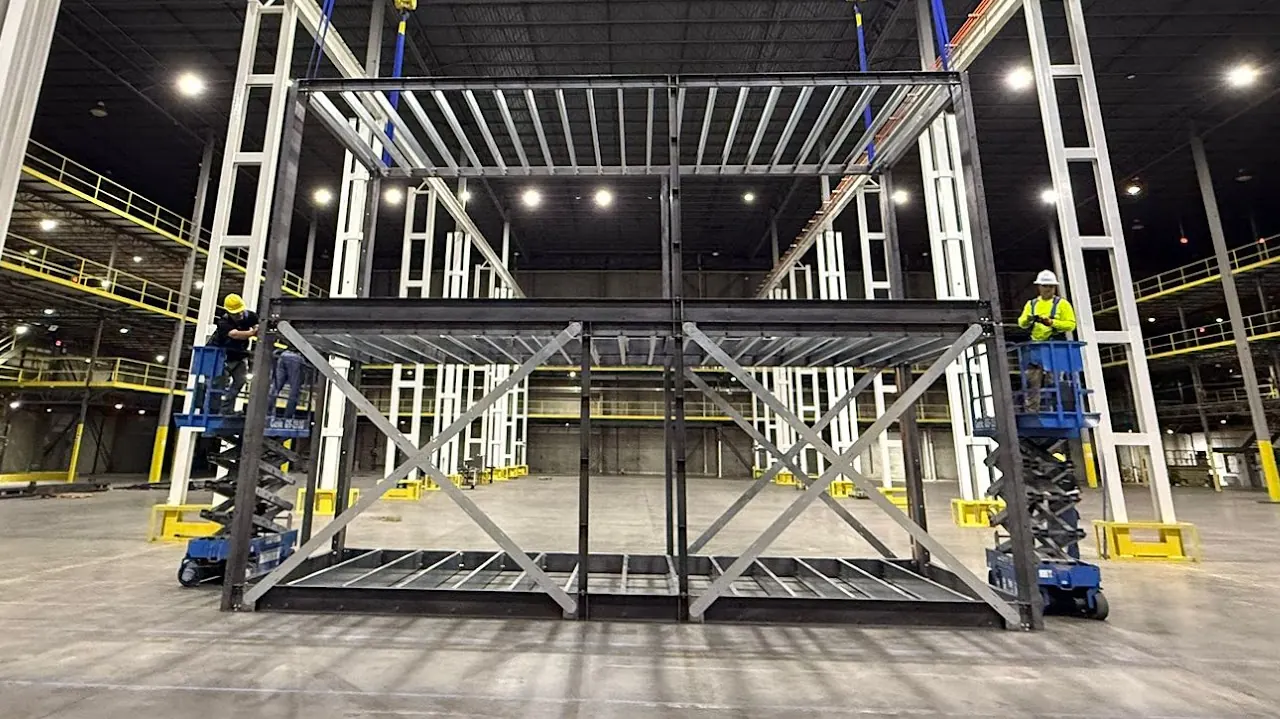
Kit frames with precision locating features
Precision locating features put each module in the right place as it lands. That removes the site work of shuffling eight-tonne modules into position with bars and jacks, and it makes factory-installed facades possible.
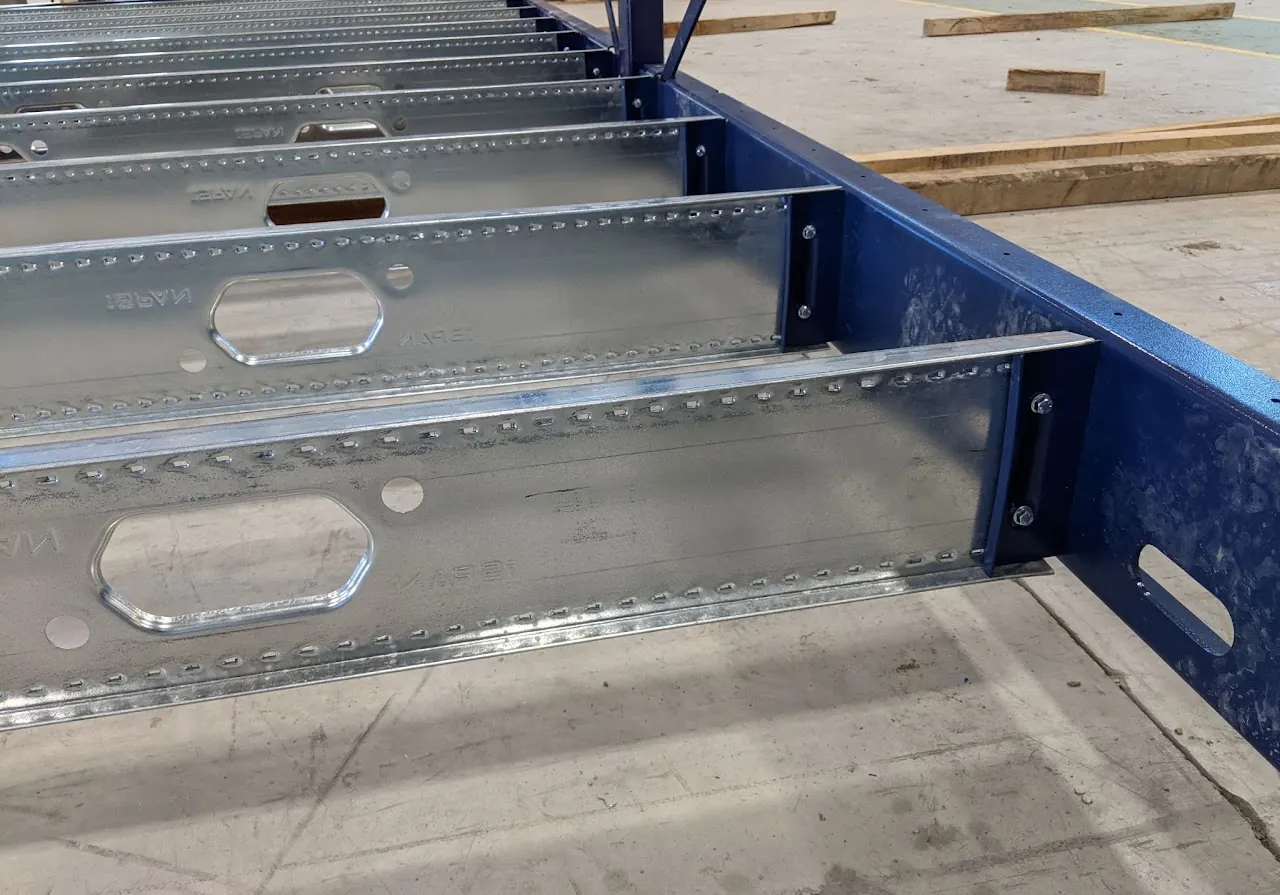
Clamped joist-to-rim-beam connection
The clamp joins joists to rim beams with no assembly welding, giving the floor torsional rigidity and true diaphragm action.
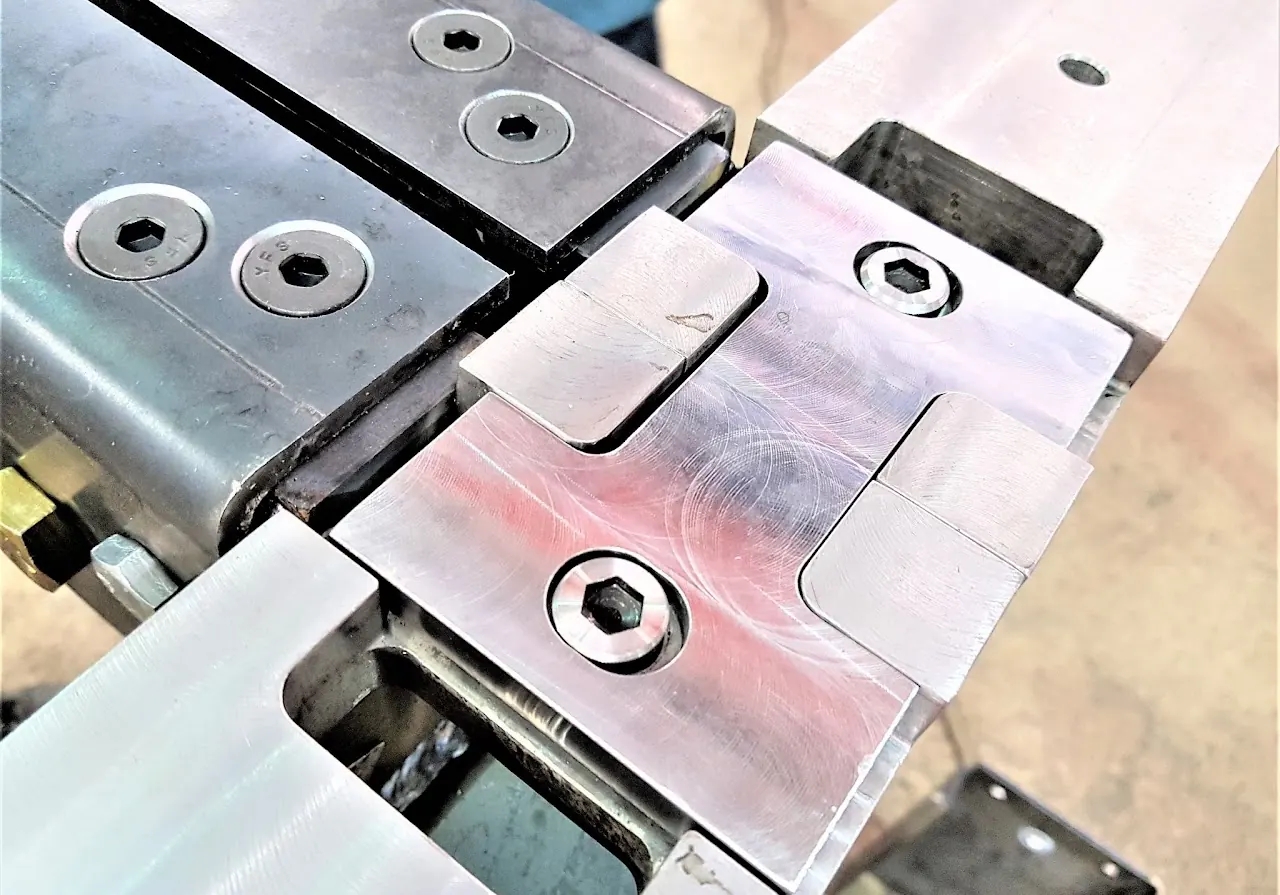
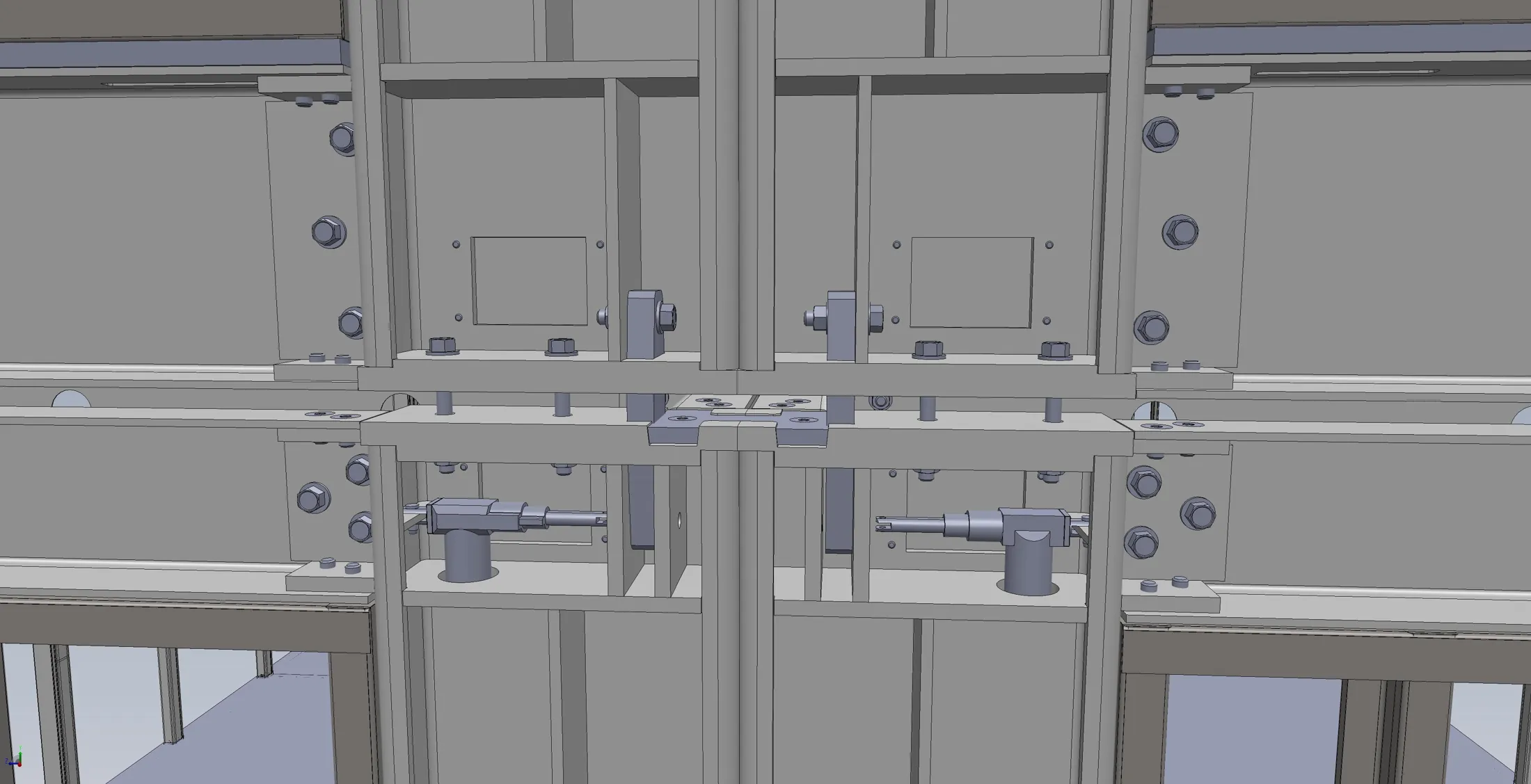
Taper-lock module interconnector
The dogbone draws adjacent modules together and continues the diaphragm across them. It sits flush, so nothing projects above the module tops and a half-built building can be covered quickly when it rains.
Semi-autonomous MEP connections
Services connect as modules are set, removing the need to mobilise plumbers and electricians to every site.
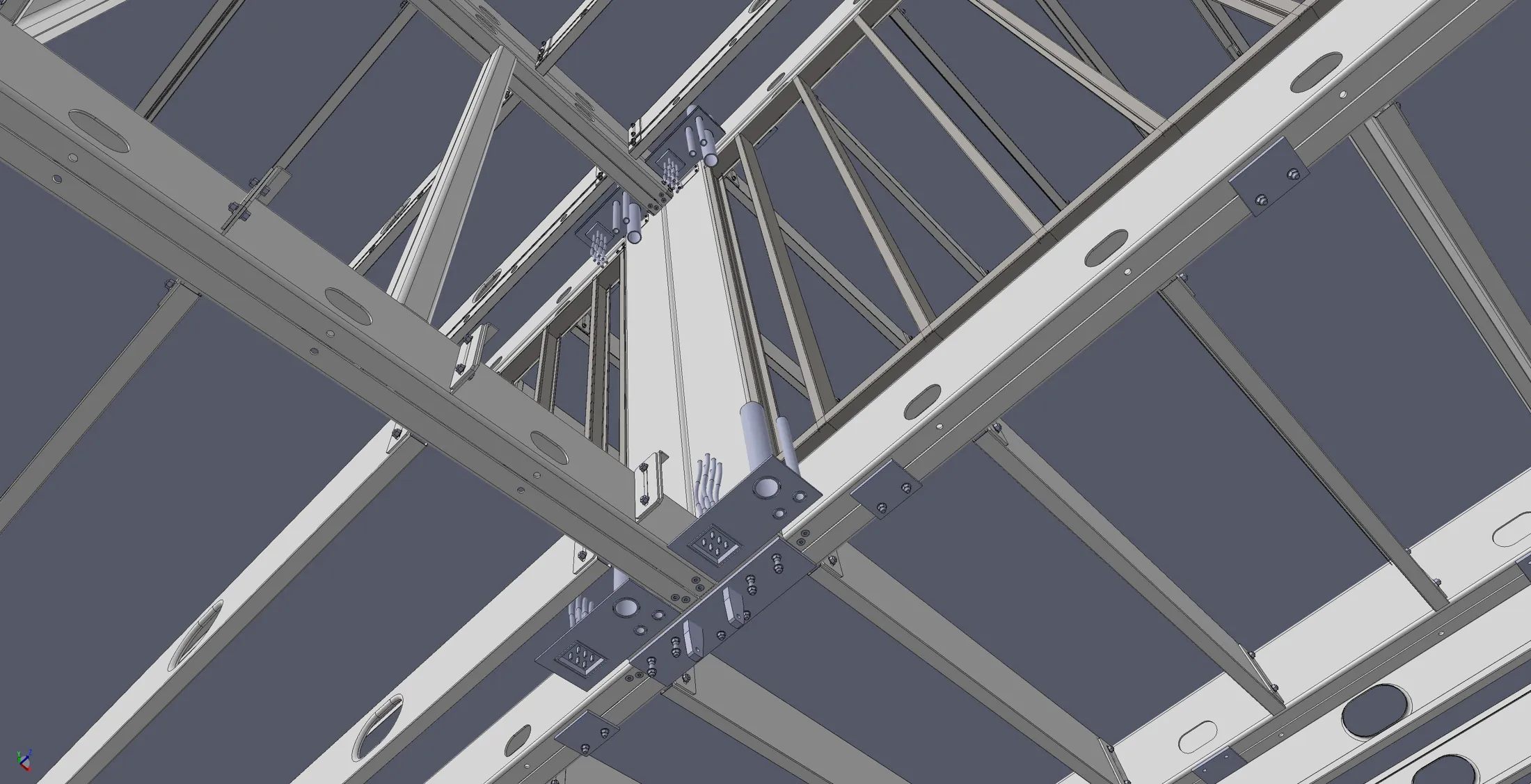
Semi-autonomous locking system
Modules lock themselves into the building, with no access needed from inside or outside. That removes the ground crew and the crew working at heights, along with the railings, harnesses and fall-protection training they require. A full set cycle takes about 11 minutes, against 20 to 30 minutes conventionally.
Maneuverable “Drone Halo”
The halo locks in and out of modules under the crane hook, removing the labour of rigging, unrigging and steering each module into the building. It relies on the semi-autonomous locking system.
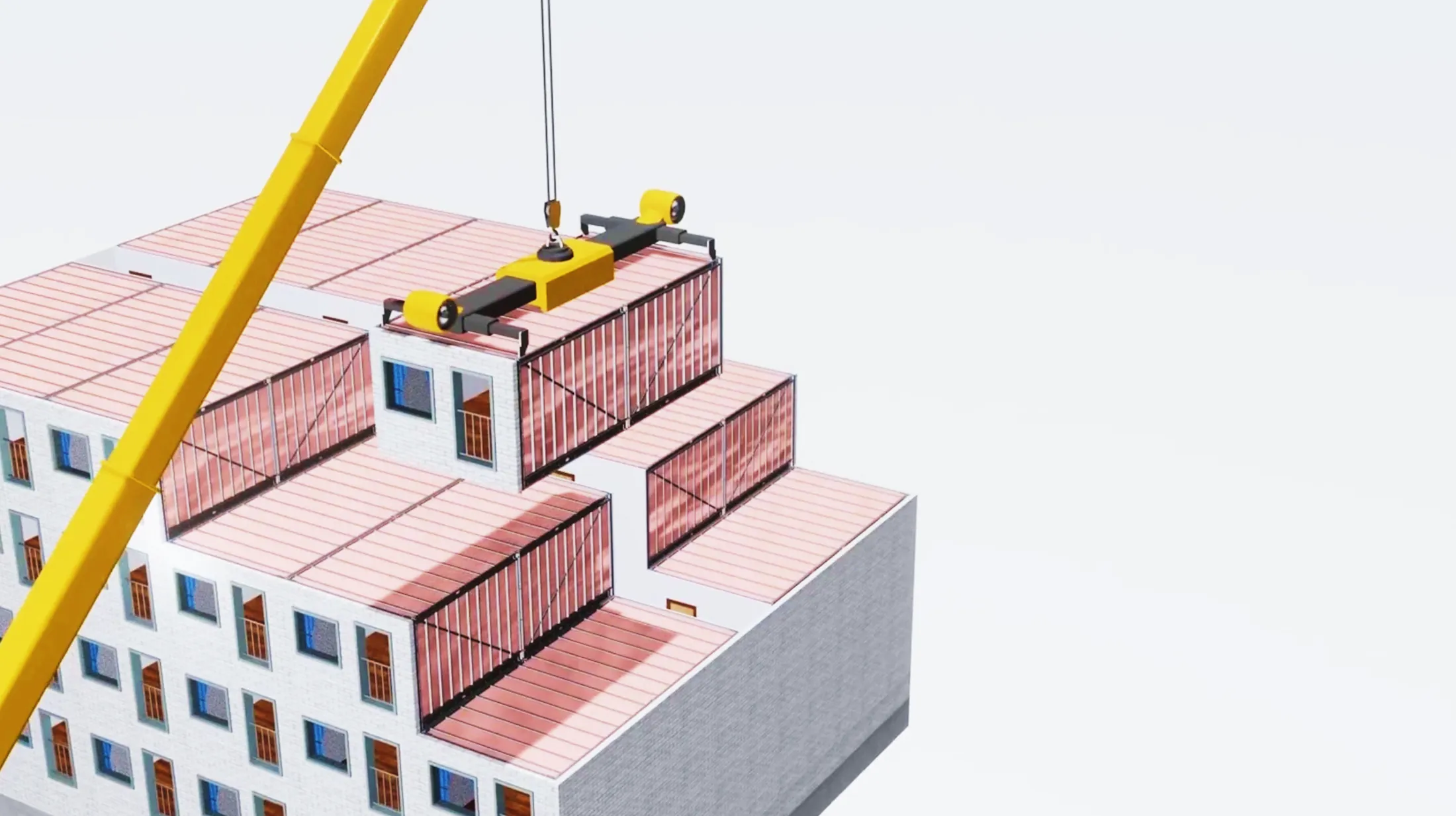
Modules locate to within the thickness of a business card, all the way up.
What it changes
Outsourced frame production
Eliminates the capital and operating cost of structural fabrication.
Available, low-cost material
95% of a frame is made from coil, with no dependence on mill rolling cycles.
Designed for production
A kit of parts made for high volume, with less welding and lower shipping cost.
Adaptable
Frame dimensions change by changing the computer model that drives the machines.
Precise
Components are held to ±.010", which removes shimming and adjustment during assembly.
Efficient
Up to 60% less steel than competing systems, with no loss in rigidity. Frames weigh 11 to 20 psf, depending on configuration.
Factory-friendly
Bolted connections replace slow welds, and panels can be built in parallel.
Easy to complete
Large openings in floor and ceiling members make room for services.
Easy to set
Modules connect from inside or outside, allowing a high degree of factory completion.